
“What is your MOQ?” and “How long will production take?” are reasonable first questions. They are also difficult to answer responsibly without a product specification. A custom beauty gift set combines several supply chains: the beauty tool, decorative finish, branded components, printed box, insert, labels and export packing. The true minimum order quantity and lead time are normally controlled by the most restrictive process in that chain.
This guide helps importers, beauty brands, retailers and promotional-gift buyers understand how suppliers calculate MOQ, what happens during sampling, and how to build a launch schedule with enough room for inspection and logistics. It does not publish a universal number because Colotutu’s commercial terms must be confirmed for the actual design, quantity and production method.
Quick answer: why does MOQ vary?
MOQ varies because production has setup costs and material-ordering thresholds. A standard product with one logo and a simple stock box may support a different minimum from a new metal shape with four plated colors and four printed gift boxes. Quantity per SKU matters more than total project quantity when every variant needs its own setup.
The main MOQ drivers are:
- Existing product versus new tooling
- Material and component availability
- Number of colors, artworks and SKUs
- Decoration process
- Custom packaging structure and print process
- Required quality, testing and labeling program
- Supplier capacity and current production schedule
When a supplier gives an instant MOQ without asking about these points, the number may apply only to a standard configuration—not the project the buyer actually has in mind.
What MOQ means in a custom beauty-tool project
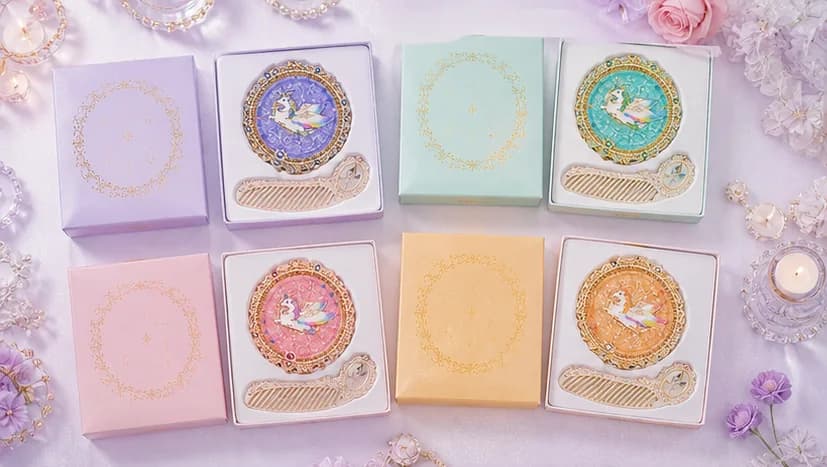
MOQ is the minimum commercially workable quantity a supplier will accept for a defined product configuration. It is not always one number for an entire collection. Consider a project of 2,000 gift sets split into four colors. The product supplier sees 500 pieces per color, the box printer sees four 500-piece artworks, and the plating process may see four separate finishing batches. A quotation based only on “2,000 sets” can hide these differences.
Ask suppliers to state MOQ at three levels:
- MOQ for the base product
- MOQ for each color, artwork or SKU
- MOQ for custom packaging and special components
Also ask whether excess components may remain because upstream suppliers sell materials in fixed lots. If packaging has a higher minimum than the finished-set order, decide who owns and stores the balance, how long it will be usable and whether design changes could make it obsolete.
The five most important MOQ drivers
1. Product platform and tooling
An existing mirror or comb platform has already passed through tooling and production setup. Basic private-label customization may therefore require less new investment. A new shape requires engineering review, tooling and initial setup, so the commercial threshold is usually different.
Tooling cost and MOQ are related but not identical. Paying for tooling does not remove the need for a viable production batch. The factory must still order materials, set processes, operate equipment and inspect output.
2. Color and finishing batches
Electroplating, pearl paint, UV printing and other finishes require setup and process control. Multiple colors increase setup events and create more approval references. A buyer can sometimes improve feasibility by launching fewer colors first, then extending the collection after demand is proven.
Do not assume that two visually similar finishes share one process. A rose-gold plated metal surface and a rose-gold printed graphic may come from different suppliers and have different minimums.
3. Packaging
Packaging often becomes the hidden MOQ driver. Rigid gift boxes, custom inserts, foil decoration and specialty papers may each have ordering thresholds. A visually complex box can require more setup than the product inside it.
To control early-stage MOQ, buyers may consider a standard structure with custom printing, a shared box across several product colors, or a universal insert where product dimensions allow. These options should support the brand experience, not simply reduce quantity at the expense of protection.
4. Variation count
Every variation creates planning and inventory complexity. A single product with four colors and two language versions can become eight sellable SKUs. The total quantity may look large, while each individual version remains small.
Before asking for the lowest MOQ, calculate the minimum useful inventory for each market. Reducing variation can improve unit economics, inspection clarity and replenishment reliability.
5. Quality and compliance requirements
Buyer-specific tests, documentation, packaging labels and inspection levels add preparation and coordination. These requirements do not automatically create a higher product MOQ, but they can affect project cost and timing. State them before quotation so the supplier can evaluate the correct process.
How to request an accurate MOQ
Send a short specification rather than asking a one-line question. Include:
- Product reference, dimensions or selected existing model
- Material and finish expectation
- Quantity per color and artwork
- Logo process and location
- Packaging type
- Destination market
- Target delivery date
- Any required tests or retailer standards
Ask the supplier to separate standard-product, decoration, packaging and tooling costs. This makes alternatives easier to compare. If the proposed MOQ is too high, ask which element is controlling it. The answer may reveal a practical redesign: shared packaging, fewer colors, an existing component or a different decoration method.
MOQ negotiation works best when both sides change the cost structure—not when the buyer only asks the supplier to accept a smaller loss-making batch.
What happens during sampling?
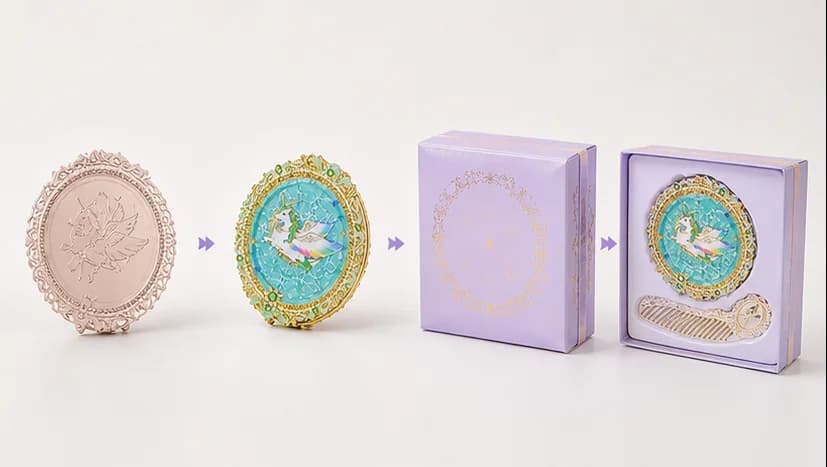
Sampling is the process of converting a brief into a physical reference. It may include more than one type of sample.
Reference or stock sample
A stock sample helps the buyer review size, general construction and functional feel. It may not show the final color, logo or packaging. Its purpose must be documented so nobody later treats it as full approval.
Appearance sample
An appearance sample demonstrates color, artwork and decoration. Some details may be handmade or produced with temporary methods. Ask what differs from bulk production and whether those differences affect repeatability.
Functional or engineering sample
This sample is used to check fit, movement, mirror retention, comb geometry and assembly. For a new structure, several revisions may be needed before decoration is finalized.
Packaging mock-up
A packaging mock-up checks dimensions, insert fit, product access and artwork position. Digital proofs are useful for spelling and layout, but a physical mock-up reveals structural issues.
Pre-production sample
A pre-production sample should represent the approved materials, processes and artwork as closely as practical. It becomes a controlled reference for mass production and shipment inspection.
How long does sampling take?
Sampling time depends on how much is new. A stock sample can be prepared faster than a new-mold project. Custom color matching, electroplating, printed packaging and component development require separate preparation and may run sequentially.
Instead of asking only for a total number of days, request a sampling schedule with milestones:
- Brief and artwork confirmation
- Technical review
- Tooling or component preparation, if applicable
- First sample production
- Buyer review
- Revision round
- Packaging mock-up
- Pre-production approval
The buyer’s own review time belongs in the schedule. If a sample reaches several departments—design, procurement, compliance and management—approval can take longer than manufacturing. Assign one decision owner and consolidate comments into one revision document.
How to review a sample efficiently
Use a structured approval form. Review the sample under suitable lighting and compare it with documented requirements. Check dimensions, weight, finish, function, branding and packaging separately.
For a mirror and comb gift set, review:
- Opening and closing action
- Mirror security and visible quality
- Comb tooth and edge finish
- Product color and plating consistency
- Logo placement and legibility
- Decorative-part attachment
- Insert grip and removal experience
- Box fit, print and surface condition
- Labels, cards and included accessories
Photograph issues with scale and clear annotations. “Color is wrong” is difficult to action; “finish is warmer than approved reference under neutral daylight” gives the supplier a direction. Record whether each item is accepted, conditionally accepted or requires revision.
Avoid approving a sample verbally. A signed or digitally approved specification should identify the sample version, artwork revision and any agreed corrections for production.
What determines production lead time?
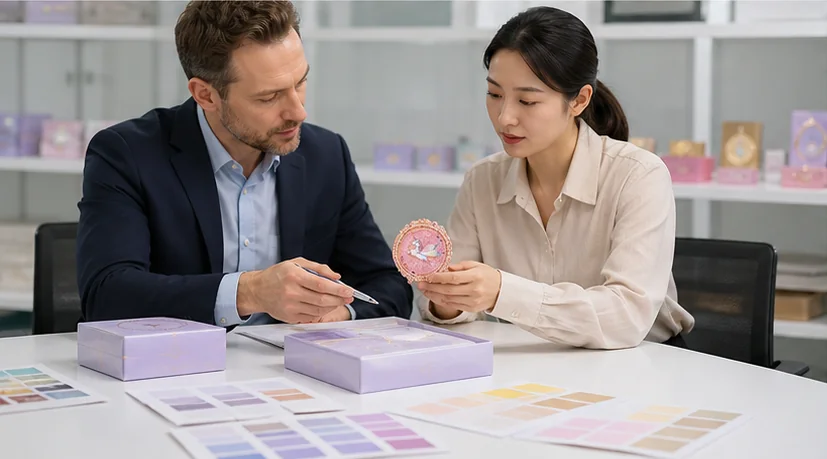
Production lead time normally begins after the order, deposit where applicable, artwork and sample approval are complete. Buyers sometimes count from the first inquiry, while suppliers count from final confirmation. Define the start point in writing.
The production calendar may include:
- Raw material and component ordering
- Casting, molding or base-product preparation
- Surface finishing
- Printing and decorative assembly
- Packaging production
- Product assembly
- In-process quality checks
- Final packing
- Shipment inspection and corrective action
Processes can overlap, but not all can start immediately. Packaging dimensions may depend on the final product; printed decoration may wait for approved artwork; assembly cannot finish until all components arrive.
Capacity also matters. A technically simple project can have a longer queue during busy seasons. Ask for a realistic production window and the latest date by which approvals must be completed to protect the target shipment.
Production time is not delivery time
Delivery planning should include time after the factory finishes production:
- Final inspection
- Rework or replacement if required
- Booking and export preparation
- Pickup and port handling
- International transit
- Customs clearance
- Inland delivery to the buyer’s warehouse
Air, express and ocean shipping have different cost and timing profiles. Do not choose the production plan on the assumption that expedited freight will solve every delay. Express shipping may also be limited by carton volume and commercial economics.
For a retail launch, create three dates: factory-ready date, warehouse-receipt date and launch date. Add buffer between them for receiving inspection, labeling, fulfillment setup and photography if those tasks occur after import.
A practical backward-planning framework
Begin with the required warehouse date and work backward:
Stage 1: market and launch preparation
Reserve time for receiving, inventory setup, content production and retail distribution. Packaging photos and approved product samples may be needed before final goods arrive.
Stage 2: logistics
Obtain a route-specific estimate from the freight provider and add contingency for booking, customs and peak periods.
Stage 3: shipment inspection
Schedule inspection when production is complete and goods are substantially packed. Leave enough time for corrective action.
Stage 4: mass production
Use the supplier’s confirmed production window, not a generic internet average.
Stage 5: sample approval
Include at least one review cycle and realistic courier time for physical samples.
Stage 6: development and quotation
Allow time to clarify requirements, compare options and confirm the final specification.
This backward plan turns “urgent” into specific deadlines. It also reveals when a project must reduce complexity or change shipping method to remain viable.
How buyers can reduce lead-time risk
Freeze artwork before production
Late logo or packaging changes can stop printed components and create scrap. Use revision numbers and one approval owner.
Confirm long-lead materials early
Ask which material, finish or packaging component has the longest procurement time. A small decorative item may control the entire schedule.
Reduce unnecessary variants
Fewer initial SKUs simplify color approval, packaging, inspection and inventory. Expand after the first launch if demand supports it.
Approve objective criteria
Terms such as “premium,” “perfect” and “high quality” are not inspection criteria. Use approved references, dimensions, functional requirements and documented visual standards.
Keep logistics in the project plan
Provide destination, carton or warehouse requirements and preferred shipping mode early. Shipment preparation should not begin after production is complete.
Sample and shipment inspection: different purposes
Sample approval confirms what the product should be. Shipment inspection checks whether bulk production reasonably matches the approved requirements. One cannot replace the other.
During shipment inspection, review randomly selected units according to an agreed plan. Checks may cover appearance, function, quantity, packaging, labels and carton condition. For gift sets, inspect both the individual components and the complete packed set. A product can pass functional checks but fail because the insert allows movement or the printed box is damaged.
If defects are found, classify them based on their effect and the agreed standard. Decide whether rework, sorting, replacement or concession is appropriate. Document the decision before release.
FAQ
What is the MOQ for a custom beauty gift set?
There is no responsible universal MOQ. It depends on the base product, quantity per SKU, color and decoration processes, packaging and whether new tooling is required. Send a project specification for confirmation.
Can I order below MOQ for market testing?
Ask whether a stock or lightly customized option is available. A supplier may offer samples or standard products in smaller quantities, while full custom production remains subject to process minimums.
Does custom packaging have a separate MOQ?
Often, yes. Box, insert, printing and specialty-material suppliers may each have their own commercial thresholds. Ask for packaging MOQ and any excess-component policy.
When does production lead time begin?
It should be defined in the quotation or order. Common prerequisites include order confirmation, payment terms, final artwork and approved sample or specification.
How many sample revisions are normal?
There is no fixed number. A basic logo and color project may need fewer rounds than a new structure. The important point is to budget at least one review cycle and define which changes are included in the sampling scope.
Can production start before packaging is approved?
Some processes may start in parallel, but doing so creates risk. Only begin components whose specifications are frozen, and document responsibility for changes made after release.
Should I use a third-party inspection company?
That depends on buyer policy, order value, risk and internal capability. Whether inspection is performed by the supplier, buyer or third party, the checklist and acceptance criteria should be agreed before production completion.
Conclusion
MOQ, sampling and lead time are not separate questions. They are outcomes of the same product architecture. More variants, new tooling, special finishes and complex packaging influence both commercial minimums and the schedule.
The most effective sourcing approach is to send a clear brief, ask which process controls MOQ, approve samples with a checklist and plan backward from warehouse delivery. This produces a more useful quotation and reduces the risk of an attractive product arriving too late—or at a quantity structure the market cannot absorb.